
- September 3, 2026
- by Parbeshkumar Maurya
Customer Data Is Useless Without Activation: Turning Customer Insights into Meaningful Engagement
- Why aren’t our campaigns delivering better results?
- Why are customers disengaging despite all our personalization efforts?
- Why do our communications still feel generic?
- Why isn’t our marketing ROI improving?
Quick Snapshot
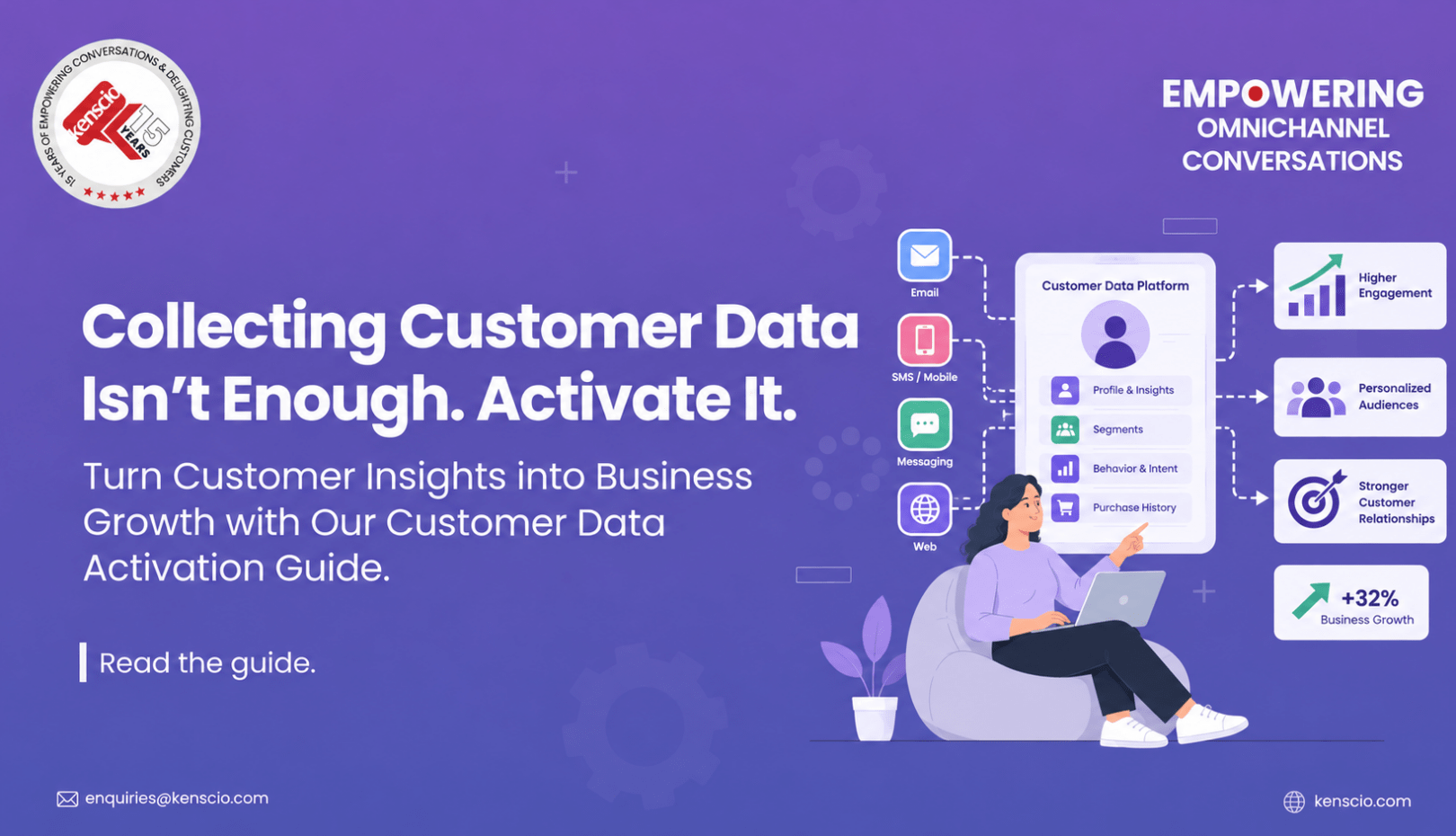
Collecting customer data is only the first step. Businesses create real value when they activate that data to personalize communication, automate customer journeys, improve marketing decisions, and deliver consistent omnichannel experiences. Simply put, customer data doesn’t drive business outcomes—activated data does.
In This Guide, We'll Explore
What Is Customer Data Activation?
Customer data activation is the process of transforming customer information into meaningful marketing actions and personalized customer experiences.
Instead of allowing valuable customer insights to remain inside dashboards or reports, activated data is used to:
- Personalize marketing campaigns
- Trigger automated customer journeys
- Recommend relevant products and services
- Improve customer experiences
- Support smarter business decisions
Think of customer data as fuel. Owning fuel alone doesn’t make a vehicle move. Only when it’s used to power the engine does it create momentum.
Customer data works the same way. Until it influences business decisions and customer interactions, it delivers very little business value.
Why Collecting Customer Data Isn't Enough
Many businesses proudly say they have customer data.
They know:
- Customer names
- Purchase history
- Website visits
- Email engagement
- Geographic location
- Product preferences
Yet every customer still receives:
- The same email
- The same offer
- The same campaign
- The same customer journey
This happens because the data is collected—but never activated.
Example
Imagine a prospect downloads your whitepaper on marketing automation. The CRM records the download. Marketing reports show increased engagement. But nothing happens next. No personalized follow-up email.
No webinar invitation, sales notification or targeted nurture journey. That’s the Data Activation Gap.
Understanding the Data Activation Gap
Organizations have invested heavily in:
- CRM platforms
- Marketing automation tools
- Analytics solutions
- Customer Data Platforms (CDPs)
- Customer databases
Yet these systems often operate independently.
Customer information remains scattered across multiple applications, making it difficult to understand the complete customer journey or deliver consistent experiences.
This disconnect creates what’s known as the Data Activation Gap—the difference between collecting customer insights and actually using those insights to improve marketing performance and customer engagement.
The result? Marketing teams spend more time analyzing dashboards than engaging customers.
Why Businesses Fail at Data Activation
While most organizations recognize the importance of customer data, many struggle to transform insights into real business outcomes. The challenge is rarely the absence of technology. More often, it’s the lack of connected systems, clean data, and a clear activation strategy.
1. Siloed Customer Data: Customer information is often spread across CRM systems, websites, mobile apps, eCommerce platforms, support tools, and marketing automation platforms. When these systems don’t communicate, marketers only see isolated interactions instead of a complete customer journey. Without a unified view, personalization becomes inconsistent and customer experiences suffer.
2. Lack of Real-Time Insights: Many businesses rely heavily on reports that explain what happened yesterday or last month. While historical reporting is useful, modern marketing requires businesses to respond to customer behavior as it happens. Whether it’s a website visit, abandoned cart, product search, or email click, real-time activation enables brands to engage customers when intent is highest.
3. Poor Data Quality: Outdated, incomplete, or duplicate customer records significantly reduce campaign effectiveness. Poor data quality leads to inaccurate segmentation, irrelevant messaging, and missed opportunities. Maintaining clean, reliable customer data is the foundation of every successful activation strategy.
4. No Clear Activation Strategy: Many organizations collect customer information without defining how it will be used. Data becomes useful only when businesses establish clear rules that connect customer behavior to personalized campaigns, automated journeys, product recommendations, and sales actions. Without a strategy, customer data simply remains another report.
Why Data Activation Matters
- Purchase history
- Browsing behavior
- Lifecycle stage
- Product interests
- Customer engagement
- A reminder email
- A WhatsApp notification
- A personalized offer
- Product recommendations
Best Practices for Customer Data Activation
1. Build a Unified Customer View: Customer information often resides across CRM systems, websites, mobile applications, eCommerce platforms, and marketing tools. Bringing these data sources together creates a single customer view, enabling marketers to understand behaviors, preferences, and engagement history before launching campaigns. A unified customer profile forms the foundation for personalized customer experiences.
2. Segment Beyond Demographics: Modern segmentation goes far beyond age, gender, or location.
Create audience segments using:
- Browsing behavior
- Purchase history
- Engagement patterns
- Lifecycle stage
- Communication preferences
- Product interests
Behavioral segmentation helps marketers deliver messages that align with customer intent rather than broad audience assumptions.
3. Automate Customer Journeys: Activated customer data becomes significantly more powerful when combined with marketing automation.
Instead of manually launching campaigns, businesses can automatically trigger:
- Welcome email journeys
- Cart abandonment campaigns
- Product recommendations
- Renewal reminders
- Reactivation programs
Automation ensures every customer receives relevant communication at the right moment without manual effort.
4. Deliver Consistent Omnichannel Experiences: Today’s customers engage with brands across multiple channels—not just email.
Customer data should power personalized communication across:
- SMS
- Push notifications
- Mobile applications
- Websites
When all channels work together, customers experience one connected brand journey rather than disconnected conversations.
5. Measure, Learn, and Continuously Optimize: Customer behavior constantly evolves—and your activation strategy should evolve with it.
Monitor key performance indicators such as:
- Customer engagement
- Journey completion rates
- Conversion rates
- Customer retention
- Revenue contribution
Analyzing these insights regularly allows businesses to refine customer journeys, improve campaign performance, and maximize long-term marketing ROI.
The Future of Marketing Is Activated Data
With advancements in Artificial Intelligence, predictive analytics, and real-time journey orchestration, businesses can move beyond reacting to customer behavior and begin anticipating customer needs. AI can identify buying intent, predict churn, recommend the next best action, and trigger personalized communication across multiple channels—often before customers actively seek assistance.
At the same time, increasing privacy regulations and the industry’s shift toward first-party data are making customer data activation even more critical. Businesses can no longer depend solely on third-party cookies or mass targeting. Instead, success will depend on how effectively they collect, unify, and activate their own customer data to deliver trusted, personalized experiences.
The future of marketing won’t belong to businesses with the largest databases.
It will belong to businesses that transform customer insights into intelligent, real-time engagement that creates genuine customer value.
Final Thoughts
Customer data has become one of the most valuable assets a business owns—but collecting it is only the beginning.
The organizations achieving the strongest marketing performance today aren’t the ones with the largest databases. They’re the ones that consistently transform customer insights into personalized, timely, and connected experiences across every stage of the customer journey.
Customer data should never remain trapped inside reports or dashboards. It should drive smarter decisions, stronger customer relationships, and meaningful engagement that delivers measurable business outcomes.
As customer expectations continue to rise, competitive advantage will no longer belong to the businesses with the most customer data.
It will belong to the businesses that know how to activate that data.
How Kenscio Helps Businesses Activate Customer Data
