
- June 24, 2026
- by Parbeshkumar Maurya
Bulk Email Marketing: The Complete Guide to Sending High-Impact Email Campaigns at Scale
Many businesses believe bulk email marketing is simply about sending one message to thousands of recipients. While that may describe the process, it doesn’t define success.
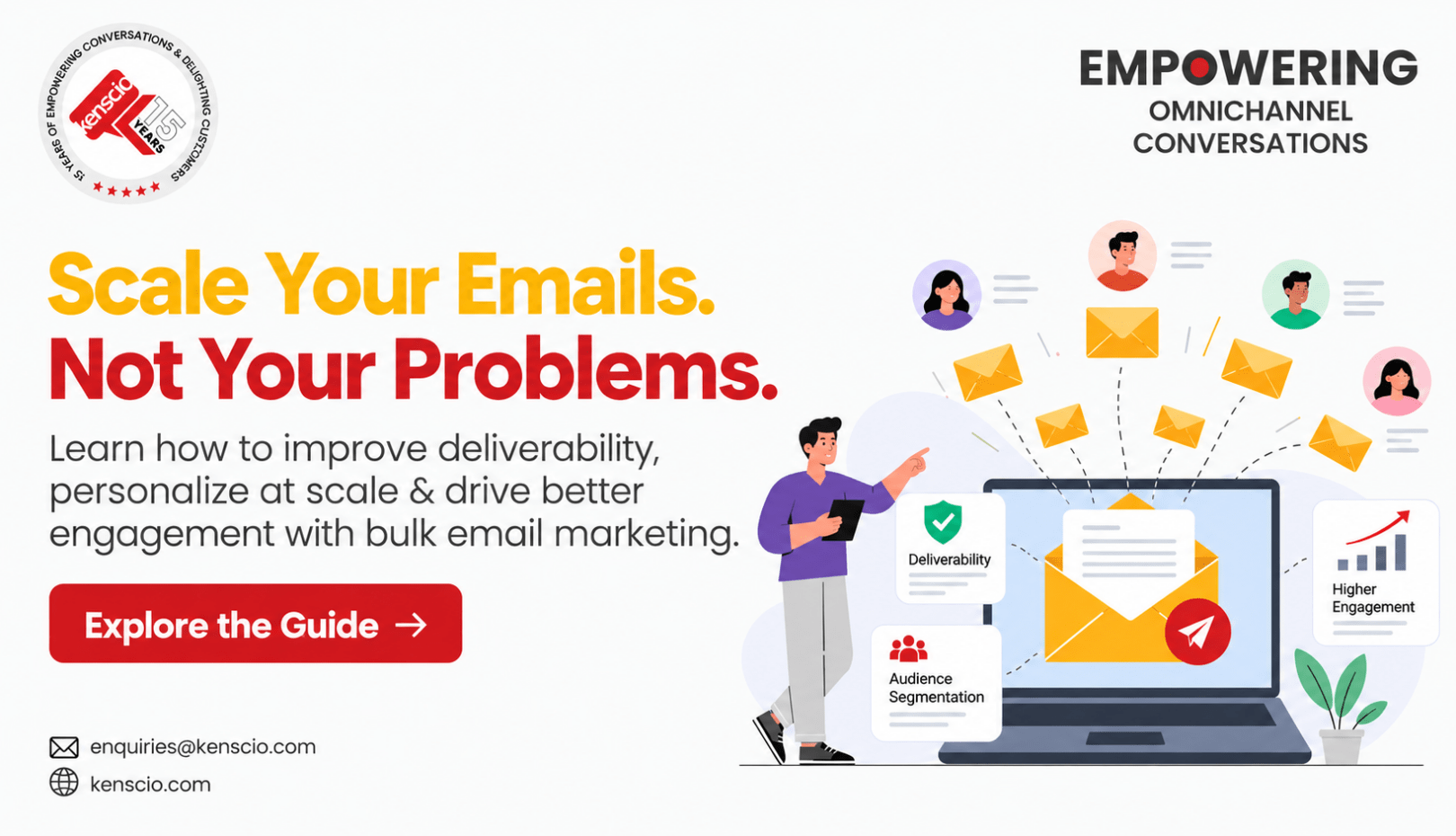
Modern bulk email marketing is about delivering the right message to the right audience at scale—without compromising personalization, deliverability, or customer experience. Whether you’re announcing a new product, promoting a seasonal campaign, sharing company updates, or nurturing leads, success depends on how relevant your communication is, not just how many emails you send.
When executed strategically, bulk email marketing enables businesses to engage customers efficiently, strengthen relationships, and drive measurable business outcomes. However, poor targeting, weak deliverability, or generic messaging can quickly reduce engagement and damage your sender reputation.
In this guide, we’ll explain how bulk email marketing works, how it differs from spam, and the best practices that help businesses run successful, high-performing campaigns.
Quick Snapshot
Bulk email marketing is the process of sending marketing or informational emails to a large group of subscribers using a professional email platform. Unlike spam, successful bulk email campaigns are permission-based, targeted, personalized, and designed to provide value to recipients while maintaining strong inbox placement and engagement.
In This Guide, We'll Explore
- What Is Bulk Email Marketing?
- How Does Bulk Email Marketing Work?
- Essential Components of Bulk Email Marketing
- When Should You Use Bulk Email Marketing?
- Bulk Email Marketing vs Email Marketing vs Spam
- Benefits of Bulk Email Marketing
- Best Practices for Successful Bulk Email Marketing
- Why Deliverability Matters
- Common Mistakes to Avoid
- How to Choose the Right Bulk Email Platform
- The Future of Bulk Email Marketing
What Is Bulk Email Marketing?
Unlike one-to-one communication, bulk email marketing is designed for one-to-many communication while still allowing marketers to personalize messages using customer information such as names, purchase history, interests, and engagement behavior. The goal isn’t simply to reach thousands of inboxes—it’s to deliver relevant communication that encourages recipients to engage, interact, and take meaningful action.
How Does Bulk Email Marketing Work?
A typical campaign begins by collecting subscribers through website registrations, newsletter sign-ups, lead generation forms, or customer purchases. Once the audience is built, marketers organize subscribers into meaningful segments based on customer behavior, demographics, purchase history, or lifecycle stage.
Next, the campaign is designed with compelling content, personalized messaging, and clear calls-to-action. Before launching, marketers test the campaign across different email clients and devices to ensure everything displays correctly. Once the campaign is sent through an email marketing platform, marketers can monitor performance using key metrics such as: These insights help businesses understand customer behavior, optimize future campaigns, and improve overall marketing performance.
Essential Components of Bulk Email Marketing
Running successful bulk email campaigns requires much more than an email list. Businesses need the right combination of technology, strategy, infrastructure, and customer data to ensure campaigns reach inboxes and generate results.
A Permission-Based Subscriber List
The foundation of every successful bulk email campaign is a permission-based audience. Subscribers should join your list voluntarily through website forms, newsletter subscriptions, event registrations, or customer purchases.
Building an organic list improves engagement, reduces spam complaints, and protects your sender reputation. Purchased email lists often contain outdated or uninterested contacts, leading to poor campaign performance and lower deliverability.
A Professional Email Marketing Platform
Sending large volumes of emails requires a platform designed for scalability, reliability, and compliance.
A professional email marketing platform provides features such as audience management, automation, personalization, analytics, and high-volume email delivery—allowing businesses to manage campaigns efficiently while maintaining strong inbox placement.
A Verified Sending Domain
Campaign Analytics and Optimization
Launching a campaign is only the beginning.
Successful marketers continuously analyze campaign performance to understand customer engagement, identify improvement opportunities, and optimize future campaigns. Regular performance reviews help improve open rates, click-through rates, conversions, and overall marketing ROI.
When Should You Use Bulk Email Marketing?
Bulk email marketing is ideal whenever businesses need to communicate with a large audience in a timely, consistent, and cost-effective manner.
Common use cases include:
- Product launches
- Promotional campaigns
- Seasonal sales
- Monthly newsletters
- Event invitations
- Customer announcements
- Educational content
- Company updates
Rather than sending individual emails manually, businesses can communicate with thousands of customers simultaneously while maintaining consistency across every message.
Bulk Email Marketing vs Email Marketing vs Spam
Although these terms are often used interchangeably, they represent very different approaches to customer communication.
| Feature | Bulk Email Marketing | Email Marketing | Spam |
| Purpose | Send campaigns to large audiences | Overall email strategy | Unsolicited emails |
| Audience | Large subscriber list | Segmented or individual audiences | Unknown recipients |
| Permission | Yes | Yes | No |
| Personalization | Moderate to High | High | None |
| Compliance | GDPR/CAN-SPAM compliant | Fully compliant | Non-compliant |
| Deliverability | High | High | Very Poor |
Bulk email marketing is one component of a broader email marketing strategy, while spam consists of unsolicited messages sent without recipient permission.
Benefits of Bulk Email Marketing
Bulk email marketing offers several advantages, including the ability to reach large audiences quickly, communicate cost-effectively, personalize messages at scale, measure campaign performance, and support broader omnichannel marketing strategies.
When executed correctly, it helps businesses build stronger customer relationships, increase engagement, and drive measurable business outcomes while maintaining efficiency and scalability.
While these advantages make email one of the most effective digital marketing channels, each benefit deserves a deeper discussion. We’ll explore the benefits of bulk email marketing in detail in a separate guide
Best Practices for Successful Bulk Email Marketing
Running successful bulk email campaigns requires more than simply sending emails to a large audience. Following proven best practices helps improve engagement, protect sender reputation, and maximize campaign performance.
Build a Permission-Based Email List
A healthy email list is the foundation of successful bulk email marketing. Always collect subscribers through opt-in forms, newsletter registrations, website sign-ups, or customer purchases. Permission-based lists contain people who genuinely want to hear from your business, resulting in higher engagement and better deliverability.
Avoid purchasing email lists, as they often contain invalid, outdated, or uninterested contacts that increase spam complaints and damage your sender reputation.
Segment Your Audience
- Purchase history
- Customer lifecycle stage
- Geographic location
- Product preferences
- Website behavior
- Email engagement
Personalize Every Campaign
Personalization goes far beyond adding a recipient’s first name.
Modern email marketing platforms allow businesses to personalize campaigns using customer behavior, purchase history, browsing activity, and preferences. Personalized recommendations, dynamic content, and behavior-driven messaging make emails feel more relevant and significantly improve customer engagement.
Optimize for Mobile Devices
Today, a significant percentage of marketing emails are opened on smartphones and tablets. If an email isn’t optimized for smaller screens, customers are less likely to engage with it.
Use responsive email templates, readable font sizes, optimized images, and large call-to-action buttons that are easy to tap. A seamless mobile experience improves readability, user experience, and conversions.
Maintain Good Email Hygiene
- Invalid email addresses
- Hard bounces
- Duplicate contacts
- Long-term inactive subscribers
Relevant Email Content
Technology alone doesn’t create engagement.
Every campaign should provide value through relevant content, whether it’s educational resources, product announcements, newsletters, promotional offers, or customer updates. Strong subject lines, compelling copy, and clear calls-to-action encourage subscribers to open, read, and engage with your emails.
Test Before Every Campaign
Even a well-designed campaign can fail if links break or layouts don’t display correctly.
Before sending, test your email across popular email clients such as Gmail, Outlook, and Apple Mail, as well as desktop and mobile devices. Verify images, buttons, personalization, subject lines, and links to ensure subscribers receive the intended experience.
Why Deliverability Matters in Bulk Email Marketing?
Creating a great email campaign means little if it never reaches your customer’s inbox.
Email deliverability refers to the ability of your emails to successfully reach recipients instead of being filtered into spam folders. Factors such as sender reputation, email authentication, subscriber engagement, and list quality all influence whether your emails reach the inbox.
To improve deliverability, businesses should:
- Configure SPF, DKIM, and DMARC authentication
- Maintain clean and permission-based email lists
- Monitor sender reputation
- Avoid spam-triggering content
- Send relevant emails to engaged subscribers
Strong deliverability ensures your campaigns are seen by the people they’re intended for, helping maximize engagement, conversions, and overall campaign performance.
We’ll explore email deliverability and inbox placement best practices in detail in a separate guide.
Common Mistakes to Avoid
Even experienced marketers can make mistakes that negatively impact campaign performance.
Purchasing Email Lists: Purchased lists often contain outdated or uninterested contacts, resulting in low engagement, spam complaints, and poor deliverability.
Sending the Same Email to Everyone: Every customer is different. Generic campaigns fail to address individual needs and interests, reducing relevance and engagement.
Ignoring Audience Segmentation: Without segmentation, businesses miss opportunities to deliver personalized content that resonates with different customer groups.
Sending Too Frequently: Excessive email frequency can overwhelm subscribers, leading to higher unsubscribe rates and lower engagement.
Neglecting Deliverability: Failing to authenticate domains or maintain list hygiene can prevent emails from reaching customer inboxes.
Skipping Testing: Broken links, formatting issues, or personalization errors can negatively impact customer experience and campaign performance.
How to Choose the Right Bulk Email Marketing Platform?
The success of your bulk email campaigns depends heavily on the platform you choose.
A reliable bulk email marketing platform should provide much more than high-volume email delivery. It should help businesses manage audiences, personalize campaigns, automate customer journeys, monitor deliverability, and measure campaign performance from a single interface.
When evaluating a bulk email marketing platform, businesses should look for enterprise-grade deliverability, automation capabilities, personalization features, real-time analytics, security controls, API integrations, and the scalability needed to support future growth.
Choosing the right platform ensures your email marketing strategy can grow alongside your business without compromising performance or reliability.
The Future of Bulk Email Marketing
Bulk email marketing is evolving from mass communication to intelligent customer engagement. Advances in Artificial Intelligence, predictive analytics, and automation are enabling businesses to deliver more relevant and personalized experiences at scale.
As privacy regulations evolve and first-party data becomes increasingly important, marketers will rely more on customer behavior and preferences to improve targeting and engagement. The future of bulk email marketing won’t be defined by how many emails businesses send, but by how effectively they deliver the right message to the right audience at the right time.
Final Thoughts
Bulk email marketing remains one of the most effective channels for reaching large audiences, building customer relationships, and driving business growth. However, success is no longer measured by the volume of emails sent—it’s measured by the relevance, value, and experience delivered with every campaign.
Businesses that combine audience segmentation, personalization, automation, strong deliverability practices, and meaningful content consistently achieve better engagement, higher conversions, and stronger customer loyalty.
As inbox competition continues to grow, the organizations that succeed won’t necessarily be those sending the most emails—they’ll be the ones delivering the most relevant and valuable customer experiences.
How Kenscio Helps Businesses Scale Bulk Email Marketing
