
- March 10, 2026
- by Parbeshkumar Maurya
The Power of Email CTAs: Why Some Emails Convert and Others Don’t
The open rates were respectable. The design looked polished. The copy wasn’t bad. On paper, everything seemed fine.
So what was wrong? It wasn’t visibility. It wasn’t engagement. It was the CTA.
Their button simply said: “Click Here.” No urgency. No value. No reason to act. We changed it to: “Unlock 20% Off Before Midnight.”
Same email. Same audience. Same offer.
Clicks increased. Sales followed. That’s when it becomes obvious: A CTA isn’t decoration. It’s the decision point.
In this guide, we’ll break down:
- Why CTAs matter more than most marketers realize
- Email benchmarks by day
- The psychology behind why people click
- Primary vs secondary CTAs (and when to use them)
- Aligning CTAs with funnel stages
- Where to place CTAs inside your email
- Color, size, and mobile optimization principles
- How to A/B test CTAs properly
- A simple CTA optimization framework
- Common mistakes that quietly kill performance
- And finally, how Kenscio’s managed services and KenMail help you optimize email conversions end-to-end
Why CTAs Matter More Than Most Marketers Realize
When someone opens your email, you’ve earned attention. When they click, you’ve earned intent. And that difference is massive.
According to Campaign Monitor, the average email click-through rate across industries sits around 2–3%. That means most opened emails never translate into meaningful action.
In many campaigns, the offer isn’t weak. The audience isn’t wrong. The CTA is unclear.
A strong call-to-action removes hesitation. It answers the silent question in your reader’s mind: “What exactly should I do next?”
If that question isn’t answered clearly and convincingly, even interested subscribers pause. And hesitation quietly kills conversions.
Email benchmarks by day
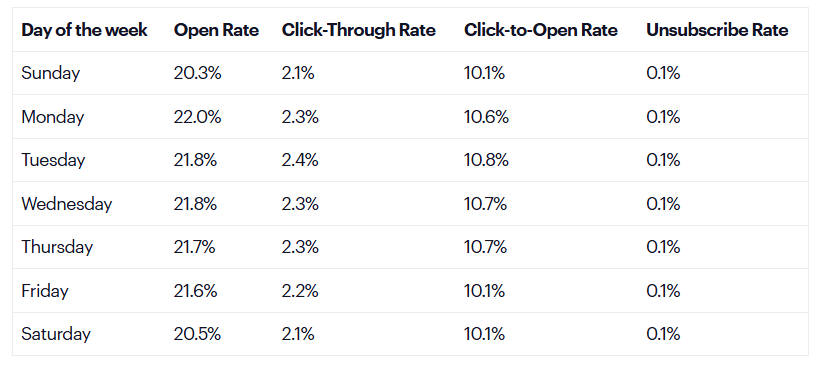
See if you’ve been sending on the right days this past year. Best day with highest click-through rates: Tuesday (2.4%) & Worst days with lowest click-through rates: Saturday & Sunday (2.1%)
The Psychology Behind Why People Click
Behind every CTA that works is psychology. Great CTAs don’t just instruct. They motivate. They work because they tap into:
Fear of Missing Out (FOMO)
“Unlock Before Midnight” works because urgency drives action. Humans are wired to avoid missing out on limited opportunities.
Loss Aversion
“Don’t Miss Your Discount” often outperforms neutral phrasing. People are more motivated to avoid losing something than gaining something new.
Specificity
“Book a 15-Min Strategy Call” feels clearer and more trustworthy than “Request Demo.” Specific details reduce friction.
Clarity Reduces Anxiety
Ambiguous CTAs create uncertainty. Clear outcomes build confidence.
Momentum
Smaller commitments (“Explore Plans”) convert better at early stages than heavy asks (“Buy Now”).
When you understand psychology, CTA writing becomes strategy not guesswork.

Primary Vs Secondary CTAs
Every email should have one clear primary objective. That objective becomes your primary CTA.
In some cases, especially in B2B or SaaS campaigns, a secondary CTA can help capture hesitant users.
For example:
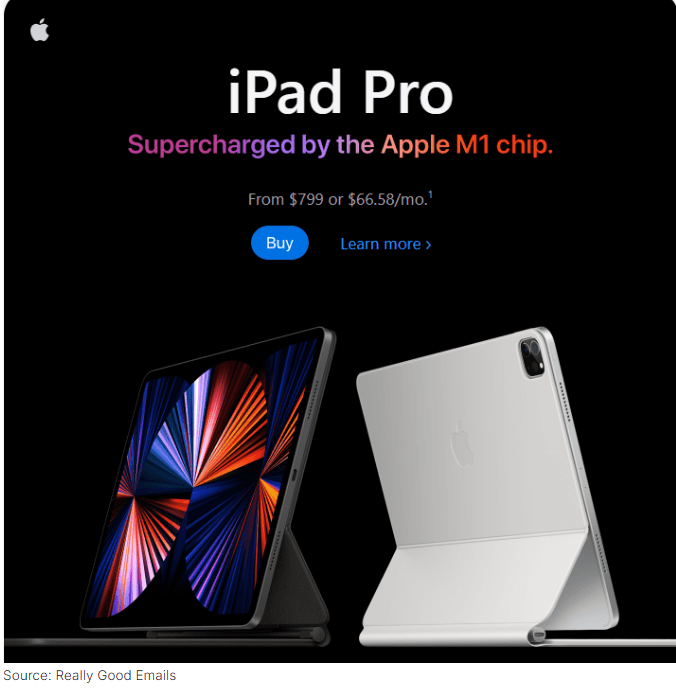
Primary: “Start Free Trial”
Secondary: “Watch Demo”
The secondary option provides a lower-friction alternative without distracting from the main goal.
However, multiple competing CTAs create decision fatigue. When readers feel overwhelmed by options, they often choose none.
Clarity beats variety.
Aligning CTAs with the Funnel Stage
Top of Funnel (Awareness)
The audience is exploring. Use softer CTAs like:- Read the Guide
- Explore Insights
- Learn More
Middle of Funnel (Consideration)
The audience is evaluating. Use:- Compare Plans
- Book a Demo
- See Case Studies
Bottom of Funnel (Decision)
The audience is ready. Use:- Buy Now
- Upgrade Today
- Claim Offer
Where Should You Place Your CTA?
Placement is not random, it’s behavioral.
Above the Fold
For urgent promotions, place your CTA early. Some readers won’t scroll. High intent deserves immediate action access.
Mid-Email
If you’re educating, storytelling, or explaining value, earn the click first. Place the CTA after the context.
End of Email
For newsletters and thought leadership, the final CTA acts as a natural next step after delivering value.
In longer emails, repeating the same CTA two or three times improves accessibility. The key word is same, not different.
Color, Size & Mobile Optimization Principles
- Be at least 44px high
- Have generous padding
- Be visually dominant
- Stand out clearly
How to A/B Test Your CTAs the Right Way
But CTA testing requires discipline.
Test one variable at a time. If you’re testing wording, keep everything else constant — subject line, layout, timing, audience segment.
For example: “Start Your Free Trial” vs “Start My Free Trial”
If performance changes, you know personalization influences behavior.
Prioritize testing CTA copy first wording usually drives bigger lifts than color tweaks.
Also define success properly. Sometimes a CTA generates more clicks but fewer conversions. Optimize for revenue, not vanity metrics.
Build a testing roadmap instead of random experiments. Over time, you’ll create a conversion blueprint tailored to your audience.
A Simple CTA Optimization Framework
High-performing CTAs typically follow this formula:
Clarity + Benefit + Visibility + Relevance + Timing = Conversion
If one element is weak, results drop.
- Clarity ensures understanding.
- Benefit motivates action.
- Visibility ensures it’s seen.
- Relevance aligns with audience intent.
- Timing matches readiness.
When all five align, conversions improve.
Common CTA Mistakes That Quietly Kill Performance
Over time, patterns become obvious:
- Too many competing CTAs
- Generic verbs without benefit
- Poor contrast or buried buttons
- Mismatch between subject line and CTA
- Asking for purchase too early
When trust and clarity break, clicks decline. Alignment builds confidence. Confidence drives action.
How Kenscio & KenMail Help You Optimize CTAs End-to-End
That’s where Kenscio comes in.
Through our Email Managed Services and Creative Strategy expertise, we don’t just design emails, we engineer conversion journeys. Every CTA is mapped to lifecycle stage, segmentation logic, and behavioral triggers. A new subscriber receives a different action prompt than a loyal customer. A high-intent user sees a stronger conversion push than an awareness-stage lead. Our expert email strategists and content specialists continuously refine messaging to maximize clarity, persuasion, and performance while dedicated relationship managers ensure campaigns evolve with your business goals.
But even the best strategy needs the right infrastructure. KenMail provides the performance backbone that makes optimization measurable and scalable. With advanced A/B testing, dynamic segmentation, seamless CRM/CDP integrations, real-time dashboards, and built-in validation tools, brands can test CTA variations with confidence and act on real data. And with 96%+ inbox placement powered by deliverability-focused infrastructure, your optimized CTAs don’t just look good they get seen.
Here’s where the rubber hits the road. These aren’t vague theories, these are tactics I’ve used with real brands to improve engagement and reduce churn:
Final Thoughts: Your CTA Is Your Revenue Lever
Email marketing success isn’t about opens.It’s about action.
Your CTA determines:
- Whether a reader clicks
- Whether they convert
- Whether your campaign drives measurable ROI
If your emails are being opened but not clicked, the bottleneck isn’t your audience.
It’s your decision point.
Refine it. Test it. Align it. Optimize it.
Because in email marketing, the smallest element often controls the biggest outcome. And that small button?
That’s where strategy turns into revenue.
