
- April 9, 2026
- by Parbeshkumar Maurya
The Complete Guide to Customer Journey Mapping in Email Marketing
Many brands invest heavily in email marketing building lists, designing campaigns, and setting up automation. On the surface, everything appears to be working.
Emails are being sent. Open rates are decent. Campaigns are running.
Yet, something still feels off.
Users drop off after the first interaction. Engagement declines over time. Conversions don’t scale as expected.
The reason is simple: most email strategies are built around campaigns not journeys.
Emails are often created in isolation, without considering what the user experienced before or what they should experience next.
Journey-based emails can generate up to 30 times more revenue per recipient than batch campaigns. Source miro.com
Customer journey mapping changes this approach. Instead of sending individual emails, it focuses on designing a connected experience that guides users step by step.
In this guide, we’ll explore:
What Is the Email Marketing Customer Journey?
The email marketing customer journey refers to the complete path a subscriber takes through your email communication from their first interaction with your brand to becoming a repeat customer or loyal advocate.
It is not a single campaign or automation. It is a series of connected interactions, each designed to move the user forward.
Every email in the journey serves a purpose:
- Introducing your brand
- Educating the user
- Building trust
- Encouraging action
- Maintaining long-term engagement
For example, when a user signs up for a newsletter, they don’t immediately need a promotional offer. They first need context—who you are, what you offer, and why it matters to them.
A well-designed journey ensures that:
- Emails feel relevant and timely
- Messages align with user intent
- Each interaction builds on the previous one
Without a journey, emails feel random. With a journey, they feel purposeful.
Why Is the Email Marketing Journey Important?
Email journeys are important because they bring structure, relevance, and consistency to your communication strategy.
Improves Relevance and Personalization
When emails are aligned with user behavior and stage, they naturally feel more relevant.
A new subscriber expects onboarding or introductory content, while an existing customer expects updates, recommendations, or value-driven communication.
Journey mapping ensures that users receive the right message at the right time—reducing friction and increasing engagement.
Drives Higher Conversions
Users rarely convert after a single email.
They need:
- Context
- Confidence
- Clarity
A structured journey gradually builds these elements, guiding users toward action rather than pushing them prematurely.
This results in more natural and higher conversion rates.
Enhances Customer Retention
- Maintain engagement
- Encourage repeat actions
- Strengthen relationships
Aligns Communication with User Behavior
One of the biggest advantages of journey mapping is that it shifts your strategy from assumption-based to behavior-driven.
Instead of guessing what users want, you respond to what they actually do.
This improves overall campaign effectiveness and ensures consistency across touchpoints.
How to Do Email Journey Mapping
Many brands identify touchpoints but fail to connect them into a continuous experience, leading to fragmented communication. Journey mapping is a structured process that combines data, user behavior, and strategic planning.
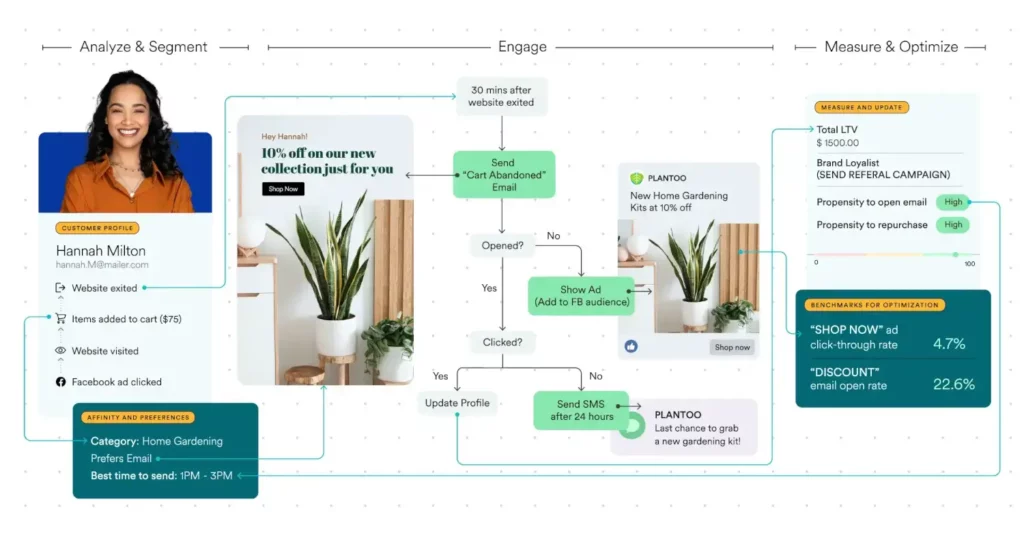
Source: moengage.com
Step 1: Identify Key User Touchpoints
Start by mapping all the ways users interact with your brand.
These may include:
- Signing up for emails
- Browsing products or content
- Clicking on campaigns
- Making a purchase
- Becoming inactive
Each of these actions represents an opportunity to trigger relevant communication.
Step 2: Understand User Intent at Each Stage
Not all users have the same intent.
Some are exploring options, some are comparing alternatives, and others are ready to act.
Understanding this intent allows you to tailor your messaging accordingly.
For example:
- Early-stage users need information
- Mid-stage users need validation
- Late-stage users need reassurance or incentives
Step 3: Analyze Existing Gaps
Most brands already have email campaigns but they are often disconnected.
Look for gaps such as:
- Missing follow-ups after signup
- Lack of communication after product views
- No engagement after purchase
Identifying these gaps helps you understand where the journey is breaking.
Step 4: Build Structured Email Flows
Once touchpoints and gaps are identified, create logical sequences.
Each email should have a clear role and connect to the next step.
For example:
- Signup → Welcome → Education → First action
- Product view → Reminder → Recommendation → Offer
The goal is to guide users progressively rather than overwhelm them.
What Are the Stages of the Email Marketing Customer Journey?
Every email journey follows a lifecycle, even if it is not explicitly defined.
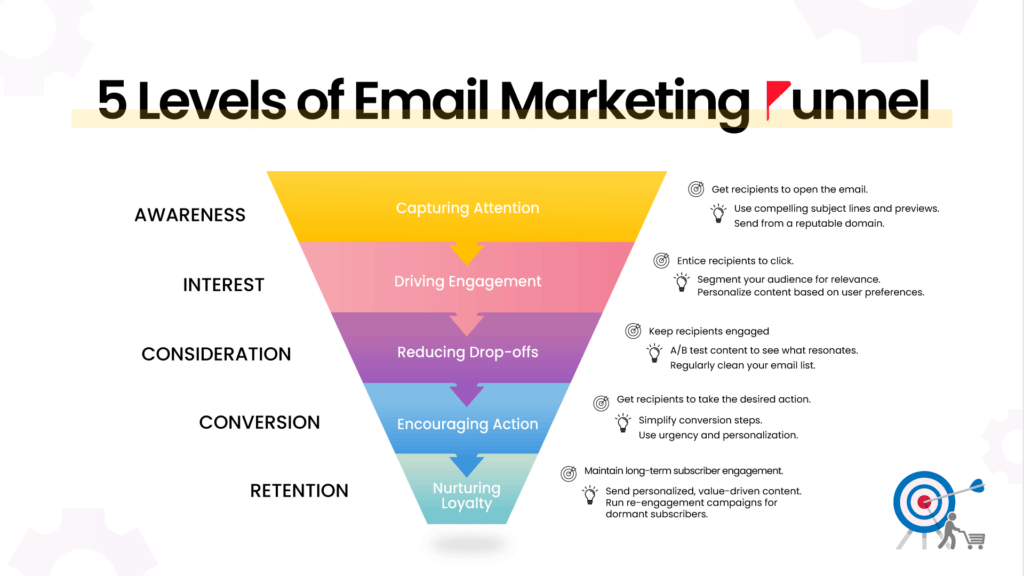
1. Awareness Stage
At this stage, users are discovering your brand.
They may have signed up for updates or interacted with your content for the first time.
Emails should provide:
- Introducing your brand
- Communicating your value proposition
- Setting expectations
The objective is to build familiarity and trust.
2. Interest Stage
Users are taking action but may need a push.
Emails should provide:
- Educational content
- Product or service details
- Highlight benefits
This stage is about building confidence and reducing uncertainty.
3. Consideration Stage
Users are evaluating whether your offering meets their needs.
They are actively seeking information and comparing options.
Emails at this stage should:
- Address objections
- Build trust
- Testimonials or case studies
Offers, demos, or reminders are often effective here.
4. Conversion Stage
Focus shifts to conversion and continued value.
Emails should:
- Support product usage
- Offer and discounts
- Clear call to action
Up sale and cross sale to increase conversion value.
5. Loyalty and Advocacy Stage
At this stage, satisfied customers become repeat users and promoters.
Emails can:
- Reward loyalty & Re-engagement campaign
- Encourage referrals
- Build community
This stage drives long-term growth through existing users.
How to Create and Implement an Email Journey
Turning a journey into reality requires both planning and execution.
Start with High-Impact Journeys
Instead of building everything at once, focus on journeys that deliver immediate value, such as welcome or abandonment flows.
This allows you to test and refine your approach before scaling.
Use Behavioral Triggers
Journeys should be activated by user actions or time-based conditions.
Examples include:
- Signup triggers welcome emails
- Inactivity triggers re-engagement emails
This ensures communication remains timely and relevant.
Focus on Timing and Sequence
The effectiveness of a journey depends not just on content, but also on timing.
Sending emails too quickly can overwhelm users, while delays can reduce relevance.
A well-paced sequence improves engagement and response.
Continuously Optimize Performance
No journey is perfect from the start.
Regularly evaluate:
- Open rates
- Click-through rates
- Conversion metrics
Use these insights to refine messaging, timing, and structure.
The 5 Core Customer Journeys Every Brand Needs
Certain journeys are essential for building a complete email strategy.
1. Welcome Journey
This introduces your brand and sets expectations for future communication.
A strong welcome journey creates the foundation for engagement.
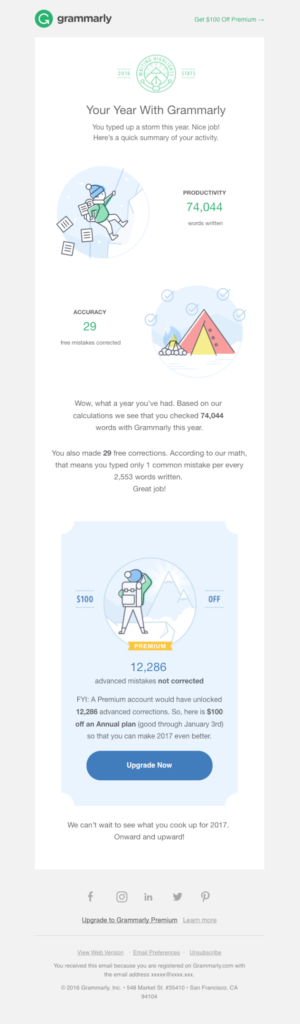
A well-structured welcome journey typically includes multiple emails that introduce your brand, set expectations, and guide users toward their first meaningful action—such as exploring a product, consuming content, or completing a profile.
2. Onboarding Journey
This helps users understand how to use your product or service effectively.
It is especially important for complex offerings or subscription-based models.
3. Abandonment Journey
Targets users who showed intent but did not complete an action.
These journeys recover lost opportunities and improve conversion rates.
For example, if a user adds a product to their cart but doesn’t complete the purchase, a reminder email followed by a personalized recommendation can significantly improve conversion rates.
4. Post-Purchase Journey
Focuses on engagement after a transaction.
It helps build trust, encourage repeat actions, and strengthen relationships.
5. Reactivation Journey
Designed to re-engage inactive users or clean your list.
It plays a critical role in maintaining deliverability and performance.
Final Thoughts: From Campaigns to Connected Experiences
Email marketing is evolving.
Success is no longer defined by how many emails you send but by how effectively those emails guide users through meaningful interactions.
Customer journey mapping transforms email from a series of disconnected messages into a structured, user-focused experience.
When done right, it improves not just engagement and conversions, but the overall relationship between your brand and your audience.
Because ultimately, effective email marketing is not about sending messages. The brands that win aren’t the ones that send more emails they’re the ones that guide better decisions at every stage of the journey.
Power Your Customer Journeys with Kenmail & Growlytics
